Teaching Mathematics Outside the Classroom
Measures
Measuring in the classroom can be difficult especially if there is limited space. There are many places to teach measures outside the classroom such as in the gym, on the playground or in the staffroom. This strand unit provides lots of opportunities for children to engage with resources and experience measures in real-life situations that may relate to their personal experiences.
Cooking
Cooking is a useful way of teaching measures that would surely engage any child.

Weighing ingredients. Children measure flour, butter and other ingredients for making scones or pancakes. Children learn how to read measures on a scales and learn about the unit of measurement (Kg and g). This activity can be completed in the staffroom.
Weighing items. Children collect items outside such as leaves, stones, feathers and sticks. Children weigh items and put them in order from the heaviest to the lightest. This is a good way for children to communicate using maths vocabulary.
Estimation. Children can predict the weight of objects before recording the official weight. This will improve their estimation skills.
Balancing. Children collect items outside such as leaves, stones, feathers and sticks. Children place one object on one side of the balance. Children make both sides balance by using non-standard units such as cubes on the other side. Children identify items that will balance.
How long?
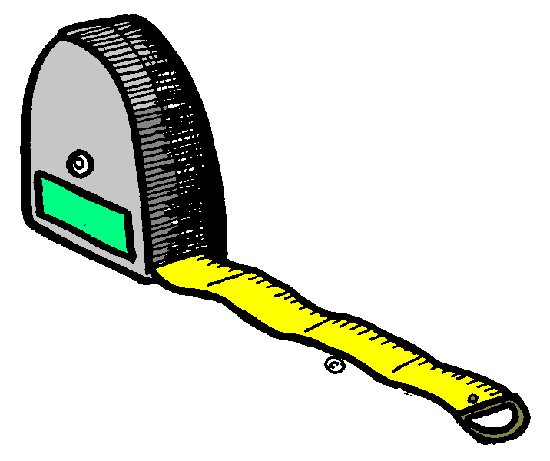
Measuring. Children measure length and width of the playground using a metre stick or a measuring tape. Take photos and record measurements. After completing this activity, the children will see the relevance of measurement in a place that they experience daily.
Measuring Height. Using a metre stick, children measure each other. Create a class height chart for a display or design one for the playground. This will be a resource that can be used numerous times.
Choosing correct instrument. Children collect items outside such as leaves, stones, feathers and sticks. Children
measure the length or width of items using a ruler, a metre stick or a measuring tape. They can choose which instrument would be best to use. Take photos and record measurements.
There are many ways to learn about length such as measuring the playground, items in the class and measuring each other.
Children can explore how time affects their lives by creating their own timetables and calendars.

Time
Design a calendar. Children design their own calendar for any given month. Write in what events they have coming up. Children ask questions and learn how to interpret their
own calendar. Chlidren can also design a school calendar by
including when school events are on.
Minute challenge. Children use stopwatches to estimate, identify and record what they can do in 1 minute. Suggested activities include jumping jacks, hopping on one foot or
counting how many times they can pass a ball to each other.